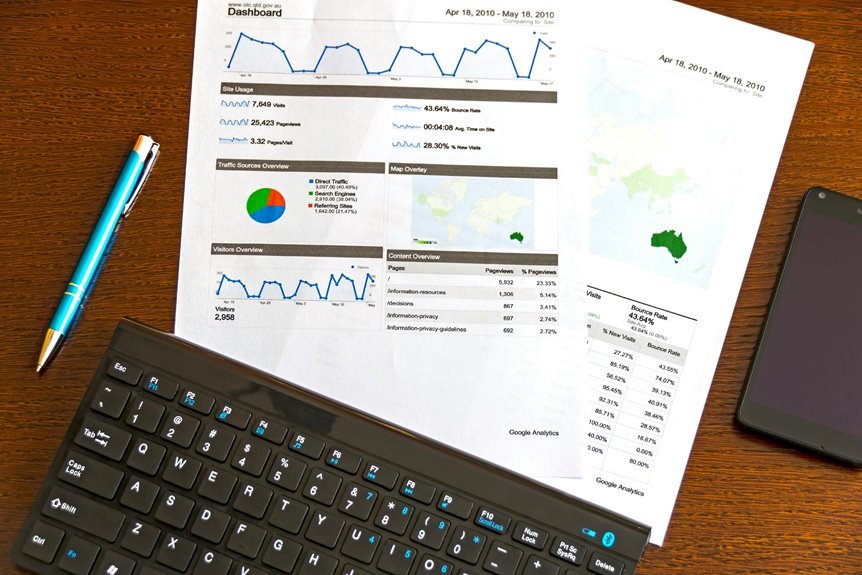
Financial Performance Dashboard: 101023442, 101030500, 101040500, 104439950, 105517881, 107502735

The Financial Performance Dashboard serves as a crucial tool for analyzing key accounts such as 101023442, 101030500, and others. It aggregates vital financial metrics, enabling stakeholders to discern patterns and detect anomalies efficiently. This analytical approach fosters transparency and enhances decision-making processes. However, understanding the implications of these metrics requires further exploration of how they influence strategic initiatives and resource allocation. What insights can be drawn from these accounts to drive future growth?
Importance of Financial Performance Dashboards
While organizations increasingly rely on data-driven decision-making, the importance of financial performance dashboards cannot be overstated.
These dashboards facilitate effective data visualization, allowing stakeholders to comprehend complex financial metrics quickly. By enabling real-time performance tracking, they empower teams to make informed decisions, identify trends, and adjust strategies.
Ultimately, financial performance dashboards serve as vital tools for enhancing organizational agility and financial clarity.
Key Financial Accounts Overview
Financial performance dashboards provide a framework for monitoring key financial accounts that directly influence an organization’s health.
By presenting account summaries, these dashboards facilitate metric comparisons across periods and departments. Stakeholders can swiftly identify trends and anomalies, enabling informed decision-making.
This clarity enhances transparency and fosters a culture of accountability, ultimately empowering organizations to maximize their financial agility and performance.
Analyzing Financial Metrics for Strategic Decisions
How can organizations leverage financial metrics to drive strategic decisions?
By analyzing financial ratios and performance trends, firms can identify strengths and weaknesses. These metrics enable informed choices regarding resource allocation, investment opportunities, and risk management.
A clear understanding of financial health guides executives in optimizing strategies, fostering growth, and enhancing shareholder value, ultimately leading to sustainable success in a competitive landscape.
Conclusion
In conclusion, the Financial Performance Dashboard serves as a crucial tool for organizations to enhance decision-making and strategic planning. For instance, a hypothetical company utilizing this dashboard identified a consistent decline in revenue from account 101040500. By analyzing the underlying metrics, management implemented targeted marketing initiatives that reversed the trend, resulting in a 15% revenue increase within six months. Such case studies illustrate the dashboard’s potential to drive informed actions and optimize financial performance effectively.